

A small configuration change.
A big environmental result.
At our Santa Catarina facility in Brazil, a targeted rethink of how adhesive is applied to one of our most popular tile formats has cut glue consumption by 42% — reducing emissions, improving workplace conditions, and delivering annual savings of BRL 424,320.
- 42% Adhesive reduction
- 5,400 kg Monthly glue saved
- BRL 424K Annual savings
This initiative demonstrates that innovation and environmental responsibility can go hand in hand.
The Challenge
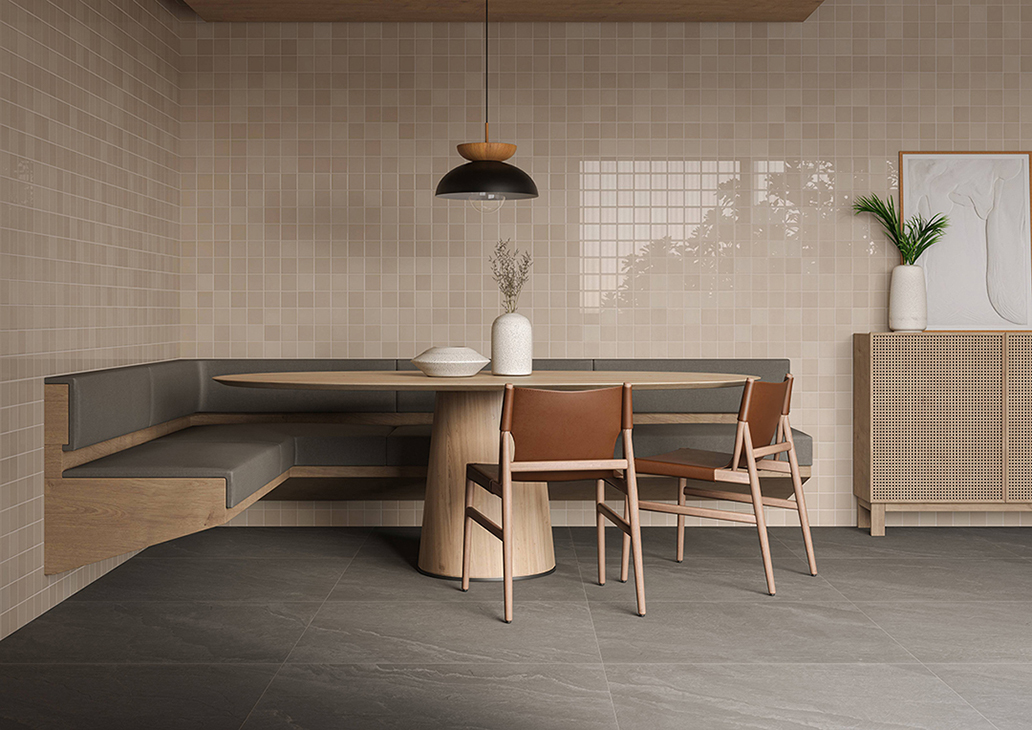
Our SC1 unit in Santa Catarina specialises in small-format tiles, producing approximately 650,000 m² of the popular 7.5 x 7.5 cm mesh format every year. In this process, individual pieces are grouped into larger panels using an adhesive fixation machine, with each element bonded at specific points under temperatures close to 250°C.
The Problem
The high number of fixation points required was generating excessive adhesive consumption — dragging on efficiency, raising costs, and contributing to unnecessary gas and smoke emissions from the high-temperature bonding process.
The Solution
The team conducted a strategic review of the adhesive application configuration — specifically, the number and placement of fixation points. By optimizing the layout without compromising product integrity or performance, the results were immediate and significant. Adhesive use dropped from 1,000 kg per cycle to 580 kg, a reduction of 420 kg per run. Across the year, that translates to approximately 5,400 kg less adhesive processed at high temperatures every month.
Beyond the numbers
The environmental and operational benefits extended well beyond adhesive volumes alone:
-
Fewer emissions
Significantly reduced gas and smoke output from high-temperature adhesive combustion, improving air quality on the production line.
-
Safer workplaces
Less adhesive at extreme temperatures means improved conditions for workers and reduced safety risks associated with Teflon detachment from trays.
-
Streamlined logistics
Lower adhesive volumes eased pressure on the internal logistics system, improving the overall operational flow of the production line.
-
Rapid payback
The BRL 3,600 adaptation investment paid itself back in just over one day — with BRL 424,320 in annual savings flowing from that single change.
Every product in the 7.5 x 7.5 cm mesh format benefits from the improvement — making this one of the cleanest examples of eco-efficiency we have achieved in recent years: a single, targeted intervention that integrates input reduction, operational gains, and emissions reductions in one action.